Sep 24, 2026
For more than 25 years, Dr. Darin Brannan has used healthcare technology to help children with complex medical needs reach their potential. In this…



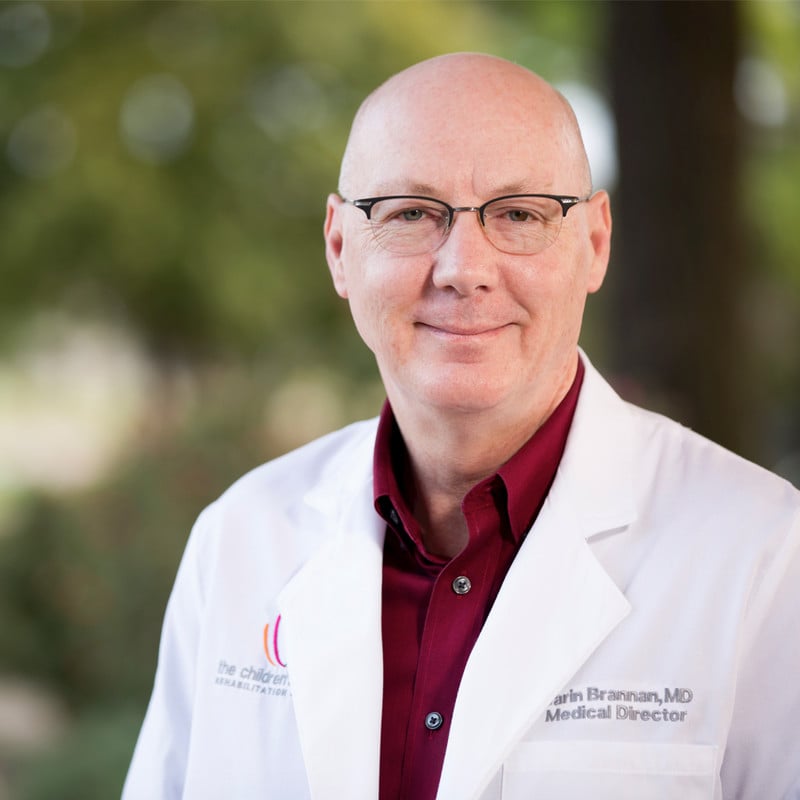
For more than 25 years, Dr. Darin Brannan has used healthcare technology to help children with complex medical needs reach their potential. In this episode of The CereCore Podcast, the Chief of Clinical Innovation at Bethany Children’s Health Center explains how the pediatric health system evaluates emerging technology, establishes AI governance and staff education before adoption, and uses ambient AI to reduce provider documentation time by two hours per day. He also discusses exoskeletons and virtual reality in pediatric rehabilitation, MEDITECH EHR optimization, and the value of a healthcare IT partner that understands an organization’s clinical workflows.
In this episode:
Connect with Darin Brannan, MD, MPH, FAAP, Chief of Clinical Innovation at Bethany Children's Health Center.
Host:
Welcome to the CereCore Podcast, where we focus on the intersection of healthcare and IT from practical conversations to strategic thought leadership. Let's unpack the decisions, challenges, and journey of those whose purpose it is to deliver technology that improves healthcare in their communities.
Today, we are pleased to welcome to the CereCore Podcast, Dr. Darin Brannan. Dr. Brannan is the chief of clinical innovation at Bethany Children's Health Center in Bethany, Oklahoma, a hospital dedicated entirely to children with complex and chronic medical needs. He is board certified in both pediatrics and clinical informatics. He earned his medical degree with distinction from the University of Oklahoma College of Medicine and his Master of Public Health and Epidemiology while completing his pediatric residency at Children's Hospital of Oklahoma.
After more than a decade of private practice, Dr. Brannan joined Bethany Children's more than 25 years ago. Over the years, he has served as medical director, vice president of medical informatics, and senior director of clinical informatics before stepping into his current role as chief of clinical innovation. His areas of special interest include bone health, nutrition, informatics, remote patient monitoring, virtual medicine, and using technology to make humans work smarter. Dr. Brannan, welcome to the CereCore Podcast.
Darin Brannan:
Thank you for inviting me.
Host:
Well, we're thrilled to have you and look forward to hearing really about the great work that you all do there at Bethany Children's. But we always like to start these podcasts with just a little history. So, we talked a little bit about it, but most healthcare leaders have that moment where they found their calling. Looks like that you found that calling early on and then had a second calling when it came to Bethany Children's. So if you wouldn't mind, just share with our audience how you got into medicine in the first place and then what led you into the care of children?
Darin Brannan:
Well, my parents were missionaries. So, I started my life on the mission field at the age of three throughout Central and South America. And after I would finish college here in the U.S, I went back to Central America to do relief work for a few years. And it was at that point that I was confronted, I guess, with the plight of a lot of children in Third World countries, just not having adequate access to healthcare, things we take for granted. And it was then that I came back to the U.S. and began the career, I guess, if you will, of actually going through training and eventually, doing a pediatric residency.
I did start off in private practice. While I was in private practice, I noticed this trend of gradual increase in number of kids with complex medical needs ending up in our doors. And I didn't quite understand why that was happening. After about seven years of that, I'd received an invitation, if you will, to go to Bethany Children's Health Center, to do a tour. The pediatrician that was in charge of the kids at that point was aging and they needed someone else to step in his very large shoes.
While I was doing the tour with the CEO at that point, he had introduced me to one of the patients. I'll step back about maybe seven years, nine years before that time. And I was in the NICU during my residency program. I was in a consulting room with a neonatologist and a mom whose child had been born with severe anoxic brain injury and was dependent on a ventilator, was dependent on a feeding tube, and was being told that her daughter wouldn't live beyond a year of life.
And so, fast-forward to that tour, the CEO called out this girl by name who happened to be walking down the hall with a nurse in hand, holding hands, with a trach, not on a vent, with a little backpack on, with her feeding pump in it. And it was the exact same girl.
Host:
Wow.
Darin Brannan:
So it was a moment, I think, where I realized that as humans, as physicians, even those of us who think we're sufficiently educated, our abilities to determine the chances or the prognosis of kids is not very accurate generally. And so, it was a realization of one, that we don't always know what we're talking about. And two, that there are higher powers acting there. So I do believe that was my second calling as you kind of phrased it there. And it's been a incredible journey ever since.
Host:
Wow. That's fantastic. And you've had, at least from my seat, a remarkable career. It's bridged, those two worlds of clinical medicine and IT and informatics. And I'd love to hear a little bit more about just how you got into... You started in the clinical side, how you started taking interest in the informatics side of things. And what does the intersection of the combination of those two things look like for you on a day-to-day basis?
Darin Brannan:
Well, I would say that while I was in Central America and doing relief work, it became quite apparent that while it was access to healthcare, it was also access to information. And within our current healthcare system, we become so, I think, enamored with technology, but we can't forget the human factor. And that it is all about the intersect between the human and the technology. So early on at Bethany Children's Health Center, I was very purposeful, I think, in my efforts to bring technology into our facility to be able to assist our providers, our nurses, our therapists in providing the best possible care, not only to advance them professionally in their knowledge, their abilities, but to utilize that technology to be able to improve outcome, patient outcome.
And so, from a day-to-day standpoint, in my role, I have the privilege of being able to embrace what, as a facility, we consider our vision, our mission. And to be able to make sure that as we undertake new projects, new efforts, that we're always focused on our original objective and purpose. But at the same time, being able to acknowledge that as long as we're honoring that vision and that mission, the route we take to get there, whether it's with the assistant of technology or not, I don't think is as important as long as we are truthful to that vision and mission. So, I would have to say that that culture, that culture of maximizing our own potential as providers and clinicians and individuals who are directly engaged with patient care, but more importantly, maximizing the child's potential all does require that interaction with technology to be able to make us much more efficient. And I think one of the common areas that a lot of maybe facilities might point to as being one of those nice overlaps is ambient listening.
And so, where some facilities may actually choose to use it for the purposes of increasing revenue, like seeing more patients, that was never our objective. It was more out of the need to support our provider and to reduce that pajama time, to reduce that after hours documentation, which ultimately supports our providers in being the best they can be. And curiously, hey, it also benefits the patient as well.
Host:
Indeed. Yeah. It is funny you bring up that particular use case and example, because I do think at least initially from a few seats, depending on the system that you were looking at, they did think, "All right, we're thinking more throughput." And in reality, it was never that. It was never that at all. And the benefits that you clearly laid out were the benefits that were there all along. And quite frankly, they were the right ones to begin with, which is great.
As the chief of clinical innovation now, you get to decide what new technologies are worth pursuing versus which ones really end up just being noise. And so, curious to see, you touched on it a little bit in what we just talked about, but maybe if we could dive in just a little bit deeper just around what that process looks like for you and the organization.
Darin Brannan:
Yeah. We do have a very structured governance process around our IT as well as AI and our EHR. So all of those have very structured processes whereby which we go through a set decision tree, if you will.
Host:
Sure.
Darin Brannan:
It starts with, is there a problem? We don't consider a solution just because it's fancy or it's really cool. We begin with the problem and then look for the solution. And so, that's step number one. There has to be a use case that we can point to that we can truly evaluate the product against. And if we're not able to make a case that it actually serves the problem, there is no need to waste our efforts on the product. Going back to the ambient listening decision, we had actually completed our AI charter, our AI acceptable use and our process for evaluation almost two years before we even began the process of looking at ambient listening. And it also governed the way that we did our pilot to evaluate the different products that we were considering to meet specifically the solution or the need around our staff burnout.
And so, it really has to be centered around a very clear cut governance process. And there has to be a problem that you can focus on. Otherwise, there really isn't a lot of need there. We do also have a very... I think it is incredibly important to make sure that there's a component of education happening along with these products that may be considered. Because as you can imagine, if you're considering looking at some AI solution, immediately, staff is going to think about, am I going to be misplaced? Am I going to be let go? Is it going to be a role for me in this facility? And so, it's important, I think, for that level of decision making to also include education and training that would then, if a certain group of individuals is going to be impacted, let's say 40% of their administrative duties are going to be done by some agent. Well, let's provide some additional professional training to give them higher level of decision making and working. That way they don't have to worry about being replaced.
So education is critical, I think, in that whole process, that decision making process, both on just the overall staff's understanding of what it is the objectives are and to the professional training advancement education that needs to go along with any new endeavor effort.
Host:
Oh, that's a great point and appreciate you bringing that up. I think there is a bit of fear out there. And so, I think that education is so important, education, communication. And then the explanation that goes along with it. I've found that when people understand the why and can be bought into that vision and then you layer in that additional component of, and we're going to help you elevate to this, then all of a sudden, there's an energy that comes back and an excitement and then everyone gets brought on board. So, that's excellent.
Well, we've talked about Bethany Children's and the tremendous work that you do with children with complex and long-term medical needs. How does serving that particular population shape the way that you think about technology and the application there at the hospital?
Darin Brannan:
It definitely influences it because while we say that our patients are dependent on technology, it's slightly different than what we're talking about here. At least 50% of our kids are ventilator dependent or feeding tube dependent or have trachs and oxygen dependent. So, they're depending on these additional supportive pieces of equipment, technology. But at the same time, there's a need around being able to see that child advance in their own potential.
As a neurotypical kid is growing and developing and basically is an information sponge and is learning all kinds of information, even in the scenario where you have a child who sustained a brain injury or a spinal cord injury, there is a tremendous resilience that the body demonstrates, particularly in the younger individuals. And so, there can be a considerable amount of retraining occur. So, I would say that there's two different pieces where the technology in this scenario would become critical. One is the ability to one, understand when that patient is beginning to emerge, meaning they're beginning to acquire new skills that maybe they didn't have before or they had before and lost. And two, be able to utilize technology to retrain or train.
A very good example would be a patient who sustained a spinal cord injury and now is paralyzed below the waist. There's a very rapid loss in muscle strength and bone density. And even with six months of immobilization, you can lose a fairly substantial amount of both. So imagine, for example, that you can put the patient now in a stationary exoskeleton. Stationary from the standpoint that it's not moving down the hall, but it's just on a treadmill. And you can strap the legs into this contraption and now, you can program the machine to actually put the legs and hips into a walking motion. So you're providing some retraining. You're bringing back some of that muscle memory. You're also assisting with muscle strengthening and bone strengthening because of the weight-bearing. So, that's in an individual who doesn't have the opportunity to be able to walk again. And to be able to sense the ability to walk, however, is a very powerful therapy motivator, if you will.
Now, you parallel that with someone who does have the opportunity to regain walking. Now you have a similar gadget that is an exoskeleton that has a walker type device attached to it where the physical therapist is behind them and is programming the gait and the speed with which the exoskeleton is making the legs move. Now you have the child just zooming down the hallway with those legs moving. And it is creating the muscle memory that the brain will then utilize to mimic that same movement, but without all of the contraptions.
So, to answer your question, a long-winded way of answering it, is that for us, it's all about does the technology bring a ability or a objective to the patient's goals, therapy goals that we could not otherwise achieve? And if the answer is yes, then it's a no-brainer. It's something that we can use to help the patient excel, maybe accelerate in their recovery process. So, I think that's just one example of types of technology that could be used within the rehab side of our facility. And we're very data intensive given the fact that we have patients that are in our facility for two plus years. There's a lot of data that we're generating and therefore there's a lot of utility to the use of language models and agents to parse through that for the purposes of clinical decision support and providing that real time feedback to the provider who's needing to ask a question of the record.
And I was back in the days when if I needed to review the record, I'd have to call medical records and have them cart up all of the paper charts. And it was incumbent upon me to go through it to find what I needed.
Host:
That's right.
Darin Brannan:
But today, it's just a simple matter of typing in a prompt, instructions and retrieving the information that can be put to use in a more timely manner. And so that type of use of technology is where we really want to be headed to support both our provider as well as our patients.
Host:
Oh, that's excellent. And I love the stories because it gives you the visualization of the technology and action assisting the patient and the patient's recovery, which is fantastic. So no, appreciate you sharing that. Well, I believe that Bethany Children's is in the middle of a major expansion with your new outpatient center of excellence. And so, large undertaking and very, very exciting. What does a project like that require from a technology and informatics standpoint, even before you can open the doors?
Darin Brannan:
I would say mostly in the area of growth, you may get pretty comfortable with the processes that you have in place to do X task, but then all of a sudden, when your footprint increases, it makes those tasks much more challenging. And so, while up to this point, we had not been able to put a smart device in the hands of all of our bedside nurses, they're pretty much married to the computer on wheels or the computer that's mounted by the bed with their barcode scanner. So as we really consider looking at this building, it really then motivated us to look into some of the two-way communication needs, some of the staff duress needs, as well as asset tracking and even patient elopement. The bigger you get, the more doors you have, the bigger challenge it becomes.
So, there's a lot of thinking that went into, okay, yeah, we have a building, but how does that impact the rest of the infrastructure that was already doing very well by us? So, it did require us having to upgrade all of our wifi access points throughout our current facility and make sure that they're the newest and greatest and they match what we're going to use in the new building. And then obviously, looking at maybe a lower profile computer for our nurses in their nurses stations within the clinic as well as our therapists. So, it's really driven us to really think more critically about some of the user interfaces. What are those workflows? What type of a computer screen combination works best for certain roles? And being very purposeful, I think, in making sure that we're not impacting negatively those workflows. But if there's anything we could do to actually improve.
And of course, that's where the ambient AI comes in and being able to have devices that would support the use for nurses that [inaudible 00:27:29] in patients and our outpatient therapists in their encounters. So the growth definitely stretched us and made us move in a number of different directions that we would probably would have been okay, satisfied with waiting another five, 10 years. But it's the right time, I think, just given the growth that we've seen.
Host:
Oh, that's excellent. Well, at CereCore, we've had the privilege of supporting Bethany Children's and optimizing your current Meditech environment. And from your seat, what challenges was Bethany Children's looking to address when that work began? And what's the biggest impact that you've seen from that?
Darin Brannan:
Well, we are, and I generally bristle at the word unique, but we are. I just have to face it. Given the nature of what we do and the complexity of the pediatric and adolescent patients we deal with, there is little standard content remaining in our current EHR build, which means that there aren't very many individuals within our EHR support that would have any inkling of the workflows that we have.
So for us, it was the easy button to be able to bring on a consulting group that has individuals with years of expertise within the system. But I would say more importantly is to have advocates, if you will, individuals who have learned our workflows, have learned the way we operate and why certain things need to work a certain way that then can go to bat with us to be able to argue our case for certain changes that ultimately would involve the EHR vendor. So, through the process of optimization, there had been a lot of things that we had not yet identified that had become operational challenges that clearly, after being able to have individuals who are well versed in the EHR system and the way that it operates could come in and make specific recommendations and to implement those and to see that all of a sudden, things actually don't look so bad. Things are looking up.
And as we expand our staff, we want to make sure that those workflows are optimized as much as possible and to get into that cadence where we're reviewing those workflows on a quarterly basis for the different departments, just so that we can stay ahead of it. Because the thing that I never want to be heard in our facility, "Well, it's that way because that's the way we've always done it." And that is just so not the right answer. There may be some things that need to remain unchanged, but generally speaking, as technology advances, as there are additional opportunities to bring in third party vendors, becomes pretty clear that optimization is a requirement before bringing those products on board. And so, it's really been an incredible opportunity, I think, for our staff to become, well, to get a perspective of what this could be like and no, we don't have to stick with our current workflow. We can actually make this better.
Host:
No, I think you hit the nail on the head there and it's that additional perspective because sometimes, you don't know what you don't know. You've got the sense that something's not right. You're hopeful that there's a better way, but you're just not sure. So, I think that's great. And I love the comment that you made about taking a look at those workflows on a quarterly basis. And so, yeah, I guess my follow-up to that would be, as you're evaluating on that quarterly basis cadence, is the EHR truly working for the clinicians? How do you measure that? And what does success look like in that process? What's the organization looking for there?
Darin Brannan:
You have your detractors and you have your early adopters and then most everybody is somewhere in the middle. I think for our purposes, as far as the goal, the objective of our optimizations are that we do have older individuals such as myself who have been here for a very long time. And so, I've seen that pendulum swing from, it's the way we've always done it, and to, no, we need to change. It comes back to education.
Change is inevitable, but as long as the staff are advised, are engaged in that conversation around the need to change, because there are external forces that we have absolutely no control over. Those are accreditation bodies, it's government and it's payers. Those external forces, we cannot necessarily just dismiss. And we have to make sure that we're in compliance with those requirements. There are internal forces that are ultimately guided by our vision, our mission, making or assisting our staff and our patients to excel.
But we acknowledge that software technology also changes. So it's not just the external. It's not just our internal needs, but it is also the technology itself. The EHR vendor will release a priority pack, enhancements, fixes, which it's very difficult for our unique state to know which of those priority packs contents will speak to a specific gap in a workflow that we've had for two years. So, that's where the idea of having these opportunities to revisit those workflows in the context of the change in technology, oh, and in the context of the change in the environment, those external forces, to make sure that we're always proactive and we're not going to be hit by some reactive need where there's a change that we haven't necessarily taken action for externally, primarily.
And so, we want to make sure that we're anticipating those things with sufficient time to give our teams time to learn, to change workflows if needed. But again, more importantly, we just want to make everybody more and more efficient.
Host:
Yeah. No, that's great. That's great. Yeah. We've talked a little bit about innovation and you've certainly mentioned AI and ambient. My understanding, and I'm very curious about this, is that you're also exploring technologies like virtual reality. And so, I'd love to see what opportunities you see for VR to improve the care and quality of life for your patients.
Darin Brannan:
Going back to the therapy patient that was in the stationary exoskeleton on the treadmill, if you provided that individual with a VR headset that was immersed within an environment, and a scenario that comes to mind is one where you're walking on a beach. The ability for the patient to be able to turn around and look where they walked and see their footprint in the sand, that will help, I think, tremendously, to extract this patient from this sterile environment to a real virtual world environment where it allows them to disconnect somewhat from their reality and to put them in a parallel reality, if you will, where they can actually dream and envision a different world for themselves. So while it may not necessarily alter their physical disability, it could certainly alter their mental disability that could become handicapping such as depression and anxiety.
Host:
Absolutely.
Darin Brannan:
So, from a behavioral mental health standpoint, it could be just incredibly motivating. So, that's just an example of a situation where VR or even better, augmented reality could provide an additional context to the therapy that we provide where it truly becomes holistic. We're treating the whole patient.
Host:
Yeah. Oh, that's great. That's great. Well, we live in the world of IT and so many of our team members and just anyone else that deals with IT, sometimes are working behind the scenes when it comes to hospitals, healthcare, they don't get to see necessarily, they're not at the bedside, they're not in front of the patient. So what would you want them to know about how their work truly impacts the patient and the clinician?
Darin Brannan:
I think from our culture, and again, our facility at Bethany Children's Health Center, there is a phrase that is built around, well, it's just me. There is no just. For us, it's we, all will make a difference. So, if we actually look at it from a higher level within our IT governance council, AI council, those are multidisciplinary, even non-patient facing individuals that are in our workforce that are engaged directly with evaluation and decision making around technology.
And so, they're getting a glimpse into the processes as well as the decisions that are being made and are gaining insight into the specific impact that those decisions have had. They have their colleagues that work in their own departments who they get to engage with and talk to and relay all of the information that's being learned through the ITGC and our AI committee. So, that is one arena.
The other is that we do have Internet, or I should say Intranet, a communications platform where we do post patient stories in particular and sometimes, provider stories that basically everybody can read. So, while it's difficult to take a employee base of a thousand plus and to communicate directly with them, we do so through this platform that is promoting patient and employee stories. But at the same time, more organically through those individuals that are already plugged into our ITGC and to the AI committee, who then can relay the information to the rest of the employee base.
So, an individual who is in environmental services, I can't say, "It's just me." And can't say, "Well, I don't make a difference," because I think within our culture, we make it really clear that what we provide to the patient cannot happen without the totality of the workforce. So, whether it's a third party vendor or it's a staff employee or even a part-time, that is the reality that we try to communicate. We may not always get it right, but it is something that we actively want to make sure that everybody understands that it's a village and it can't work without each of us doing our part.
Host:
Indeed. Well stated. Well stated. Well, you've done such a good job of giving us some great visuals and telling some stories. I'm going to ask you to tell one more as we close out the session. And as you said, you've been in healthcare for a couple of years. Is there a patient moment that you can think of that has happened somewhat recently where technology made something possible that when you first started down this path in medicine, you just thought was completely impossible? Something that might jump out at you?
Darin Brannan:
Well, certainly, the second patient I mentioned with the exoskeleton on the walker, because the kid doesn't need that anymore. But the one that comes to mind is relatively recent, and it was more of an aha moment that was totally unexpected. And it was around the ambient listening within our outpatient clinic. We have attempted to get feedback from our providers and we do have patient satisfaction surveys that go out. But there was one in particular that was a very curious comment that was made that I'd never really thought about. And that was that while the provider was in the room, doing the exam, and to be able to get the exam into the ambient listening encounter, you actually need to say what it is you're doing and what your findings are.
And so, when he was done, the parent said, "I didn't know that's why you listened to the lungs. That you're listening and you're making all of these decisions about, oh, the heart is regular rate and rhythm and there's no murmurs. There's no abnormal sounds." To me, it was a revelation that while we presume our patients' parents are knowledgeable about what we do as providers, I can't presume that anymore because it was pretty clear by that parent's comment that this was a revelation to them, that they just did not quite comprehend what is all going on in that process.
And there have been other comments around just being able to get their pediatrician back. And what that meant is that the computer was no longer being an interrupter in that relationship. It wasn't necessarily inserting itself between the parent and the pediatrician. Which, while intuitively, you would think that that would be the case, we're seeing more and more parents and patients even comment about the fact that they just enjoy so much more of the encounters when they're more eye to eye, when they're actually part of the interaction as opposed to being interrupted by the computer.
So while it's not miraculous examples, I think they're relatively recent ones that were birthed out of our decision to go down this pathway of ambient listening. And the rest of the story with that is that we have providers who are spending two less hours a day in documentation who are actually enjoying their job again.
Host:
Wow.
Darin Brannan:
And having a parent, having a patient enjoy those interactions again, does, I think, meet the original objective of our decision to go down that pathway. There was a problem and we found a solution. And there are so many other things we didn't even imagine that have been birthed out of that decision.
Host:
Oh, that's fantastic. That's fantastic. I appreciate you sharing that. Well, Dr. Brannan, thank you very much for your time today. More importantly, thank you just for your service over the years to the communities that you've been so intricately serving. It's a calling, it's a mission. We just appreciate you taking a few minutes to share a little bit with our audience about that journey.
Darin Brannan:
It's been a pleasure. Thank you.
Host:
Thank you very much.
Thanks for listening to the CereCore Podcast. We hope you enjoyed this conversation. Follow us on your favorite podcast platform for more episodes. Connect with us on LinkedIn. Visit our U.S. website at cerecore.net. And for those abroad, visit cerecoreinternational.net, learn more about our services and find resources. At Cerecore, we are healthcare operators at heart and know the difference that the right IT partner can make in delivering quality patient care 24/7. Let's help make IT better. Here's to the journey.
For more than 25 years, Dr. Darin Brannan has used healthcare technology to help children with complex medical needs reach their potential. In this…
Hector Rodriguez brings a different kind of resume to healthcare IT leadership. Before joining Humboldt Park Health as Vice President of IT in 2022,…
What does healthcare leadership look like when you never forget there's a human on the other side of every interaction? In this episode of The…
Let us know how we can support your initiatives and take some of the heavy lifting from healthcare IT.